Anúncios
The Hidden World of Forgotten Feast Festivals
Food has always been more than something we eat. Across centuries, people used meals, ceremonies, music, and gatherings to celebrate life, honor nature, remember ancestors, and bring communities together. Many of these celebrations are now known as Forgotten Feast Festivals, ancient or traditional food-centered events that slowly disappeared from everyday culture.
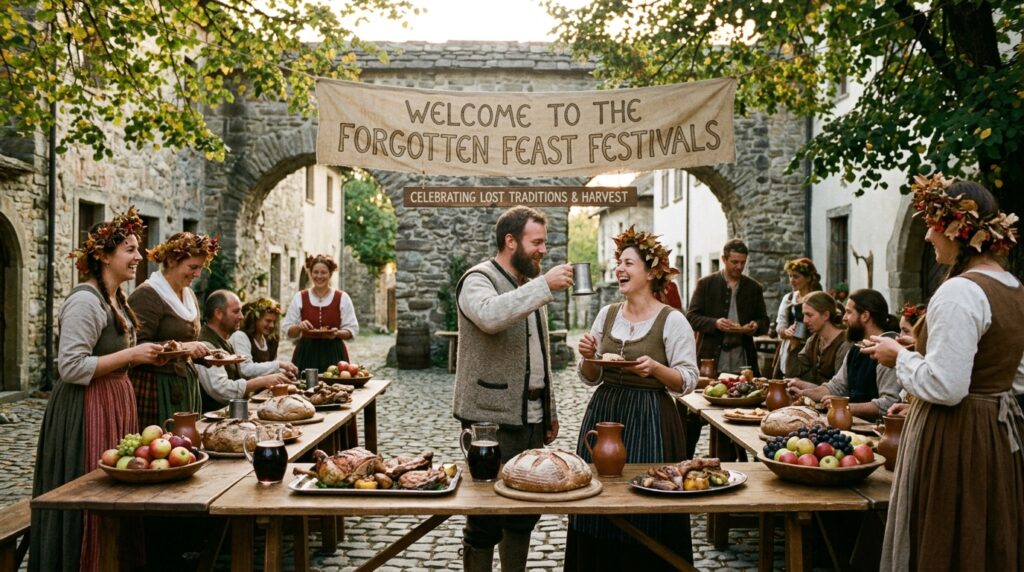
These festivals were once important moments of the year. Families prepared special dishes, villages decorated public spaces, musicians played traditional songs, and people gathered around long tables to share food and stories. Some festivals marked the harvest season, while others celebrated religious dates, local legends, seasonal changes, or family heritage.
Today, many of these traditions are almost unknown. They survive only in old recipes, family memories, local archives, or stories told by older generations. But as more people search for authentic cultural experiences, forgotten feast festivals are beginning to attract attention again. 🍽️✨
Why Forgotten Food Festivals Matter Today
In a modern world filled with fast food, digital entertainment, and busy routines, traditional feast festivals remind us of something valuable: community. These celebrations were not designed only for eating. They were created to connect people.
A forgotten food festival can reveal how a community lived, what ingredients were important, what beliefs shaped daily life, and how people celebrated joy, survival, and gratitude. Every traditional dish had a purpose. Every song had meaning. Every ritual carried a memory.
For historians, these festivals are cultural treasures. For travelers, they offer a deeper way to understand a place. For families, they can reconnect generations. And for communities, reviving these festivals can bring pride, tourism, and cultural preservation.
Forgotten feast festivals matter because they help protect stories that could otherwise disappear forever. 🌾
Ancient Feast Traditions and Their Symbolic Meaning
Many ancient feast traditions were deeply symbolic. Food was often linked to blessings, prosperity, protection, fertility, health, or remembrance.
Bread, for example, was commonly seen as a symbol of life and abundance. Grains represented harvest and survival. Fruits were connected to renewal and fertility. Herbs could represent healing or spiritual protection. In some cultures, sweets were prepared to celebrate good fortune, while shared soups or stews represented unity.
The act of eating together was also meaningful. A communal meal showed that people belonged to the same group. It reduced social distance and created a sense of shared identity. Even simple dishes became powerful when prepared for a special celebration.
In many forgotten festivals, the first serving of food was offered to ancestors, spiritual figures, or nature. This shows how closely food was connected to faith and respect. 🍞🕯️
How Forgotten Feast Festivals Disappeared
Many traditional food festivals disappeared because life changed. As people moved from villages to cities, community celebrations became harder to maintain. Modern work schedules replaced agricultural rhythms, and younger generations often stopped learning old customs.
Global culture also had a strong impact. Popular holidays, commercial events, and online trends became more visible than local traditions. In many places, small festivals were replaced by larger, more modern celebrations.
Migration also played a role. When families moved to new countries or cities, they sometimes left behind the ingredients, spaces, and community networks needed to continue the festival. Over time, only fragments remained: a recipe, a song, a decoration, or a memory.
Some festivals were also lost due to political changes, conflict, economic hardship, or religious transformation. When traditions were not documented, they became vulnerable. Once the last people who remembered them passed away, entire celebrations could vanish.
Traditional Feast Foods That Tell a Story
One of the most fascinating parts of forgotten feast festivals is the food itself. Traditional recipes often tell stories about geography, climate, economy, and belief.
In mountain regions, feast foods often included preserved meats, cheeses, root vegetables, and warm soups. In coastal areas, fish, seafood, herbs, and fresh vegetables were common. Agricultural communities celebrated with grains, corn, beans, fruits, and handmade breads.
Many dishes took hours or even days to prepare. This slow preparation was part of the celebration. Families cooked together, neighbors exchanged ingredients, and children learned by watching older relatives.
Some recipes were prepared only once a year. That made them special. The flavor became connected to memory. A single dish could remind someone of childhood, family gatherings, village music, or a holiday that no longer exists.
This is why forgotten feast foods are so important. They are edible history. 🍲📜
Forgotten Feast Festivals Around the World
Different regions had different feast traditions, but many shared similar themes.
In parts of Europe, village feasts were often connected to harvests, saints, and seasonal changes. People gathered in public squares, shared bread, wine, roasted meats, and traditional desserts.
In Asia, many food festivals honored ancestors, moon cycles, agricultural seasons, or spiritual beliefs. Offerings, family meals, and symbolic sweets were often central to the celebration.
In Africa, many communal feasts included music, dance, storytelling, and dishes prepared for large groups. Food was closely connected to identity, hospitality, and oral tradition.
In Latin America, feast festivals often blended Indigenous customs, religious influences, and local ingredients. Corn, beans, fruits, spices, and ceremonial foods played important roles in many celebrations.
Although many of these festivals faded, their traces remain in recipes, songs, clothing, and regional memories. 🌎
The Role of Music, Dance, and Community Rituals
Forgotten feast festivals were not only about food. They were full cultural experiences. Music, dance, costumes, games, prayers, and storytelling helped create the atmosphere.
Music often announced the beginning of the festival. Drums, flutes, string instruments, and singing brought people together. Dance transformed the celebration into movement and emotion.
Storytelling was especially important. Elders explained the meaning of the feast, shared legends, and taught younger generations why the event mattered. In many communities, stories were the main way of preserving history.
Rituals also played a central role. Lighting candles, blessing food, decorating tables, offering the first portion, or walking through the village were symbolic actions that gave the festival meaning.
When a feast festival disappears, these cultural elements often disappear with it. That is why preservation must include more than recipes. 🎶🔥
Why Forgotten Feast Festivals Are Returning
In recent years, interest in old food traditions has grown. People are looking for authentic experiences, local culture, and meaningful travel. This has helped forgotten feast festivals return in new ways.
Food tourism is one major reason. Travelers want to taste regional dishes and experience traditions that cannot be found in regular tourist attractions. Small towns can use revived festivals to attract visitors while protecting local identity.
Social media has also helped. A traditional dish, costume, or celebration can reach thousands of people through photos and videos. This visibility can inspire younger generations to value their heritage.Another reason is emotional. Many people want to reconnect with their roots. They search for family recipes, old customs, and cultural stories. Forgotten feast festivals offer a beautiful way to rebuild that connection. ✨
How to Revive a Forgotten Feast Festival
Reviving a forgotten feast festival takes care and respect. The first step is research. Communities can interview elders, collect recipes, search old photographs, record songs, and document memories.
After that, small events can be organized. A local gathering may include traditional dishes, music, storytelling, cultural exhibitions, and workshops. Schools, museums, families, and community groups can all participate.It is important not to turn the festival into something purely commercial. The goal should be cultural preservation, not only entertainment. The original meaning of the celebration should be respected.
A revived feast festival can become a powerful symbol of identity. It can teach children, unite families, support local tourism, and protect traditions for the future. 🌟
The Future of Forgotten Feast Festivals
Forgotten Feast Festivals are more than old celebrations. They are bridges between past and present. They remind us that food carries memory, and that culture survives when people choose to remember it.
In the future, more communities may bring these traditions back through local events, digital archives, documentaries, cookbooks, and cultural tourism. Each recovered recipe and each revived ritual can help protect a piece of human history.These festivals show that celebration does not need to be modern to be meaningful. Sometimes, the most powerful experiences come from returning to simple things: a shared table, a traditional song, a handmade dish, and a story passed from one generation to the next.
Forgotten feast festivals may have been hidden for years, but they still have something important to teach us: culture lives when people gather, remember, and celebrate together. 🍽️🌍✨