Anúncios
🌍 Introduction: A Look Inside the Kitchens of the Past
Before gas ranges, electric ovens, and modern cookware transformed the way we prepare meals, ancient civilizations relied on ingenious kitchen technologies developed through centuries of observation and experience. Every culture created tools and cooking methods suited to its environment, using natural materials such as stone, clay, wood, bronze, and iron to prepare nourishing meals for families and entire communities.
Many of these forgotten kitchen technologies have disappeared from daily life, replaced by faster and more convenient appliances. However, they remain invaluable for understanding culinary history. Archaeologists continue discovering ancient kitchens filled with handcrafted tools that reveal how people cooked, stored food, controlled heat, and preserved ingredients without modern equipment.
Today, these traditional techniques are inspiring chefs who seek authentic flavors while encouraging more sustainable approaches to cooking.
🔥 Cooking With Embers Instead of Flames
One forgotten technique involved cooking with glowing embers rather than open fire.
Instead of exposing food directly to flames, ancient cooks buried ingredients beneath hot coals or surrounded clay pots with burning embers.
This method produced slow, even heat that prevented food from burning while allowing flavors to develop naturally.
Vegetables became sweeter.
Bread baked evenly.
Large cuts of meat remained incredibly tender.
Many modern slow-cooking techniques follow similar principles, although few people realize their origins date back thousands of years.
🧱 Mud Ovens Built From Local Materials
Across Africa, Asia, and the Middle East, communities constructed ovens entirely from clay, mud, straw, and sand.
These handmade ovens trapped heat extremely well, allowing families to bake bread, roast vegetables, and cook meats using surprisingly small amounts of fuel.
Once heated, many mud ovens remained hot for hours.
Their energy efficiency made them practical long before modern insulation existed.
Today, traditional earth ovens remain popular in rural communities and artisan bakeries.
🌾 Grain Storage Before Modern Silos
Protecting harvested grain represented one of history’s greatest challenges.
Ancient farmers built underground storage pits, raised wooden granaries, and sealed clay containers to protect cereals from insects, rodents, and moisture.
Some civilizations lined storage rooms with stone or plaster to maintain stable temperatures.
Without these innovative storage techniques, many communities could not have survived harsh winters or prolonged droughts.
Food storage technology became just as important as cooking itself.
🥄 Handmade Kitchen Utensils
Before factories mass-produced kitchen equipment, every utensil was handmade.
Craftsmen carved wooden spoons from hardwood.
Blacksmiths forged iron knives individually.
Potters shaped bowls and jars by hand.
Basket weavers created food containers using reeds and grasses.
Each household owned unique tools that reflected regional craftsmanship and available natural resources.
Many of these handmade utensils remained functional for decades.
🌬️ Cooling Food Without Refrigeration
Keeping food cool required remarkable creativity.
Ancient civilizations stored perishable ingredients inside underground chambers, shaded caves, or thick clay containers that naturally reduced internal temperatures.
Some communities placed storage jars where evaporation created cooling effects.
Others used flowing spring water to preserve dairy products and fresh vegetables.
These passive cooling techniques demonstrate an impressive understanding of natural physics long before refrigeration existed.
🌿 Cooking With Aromatic Woods
Not all firewood served the same purpose.
Ancient cooks deliberately selected different woods according to the food being prepared.
Fruit trees added subtle sweetness.
Oak created deep smoky flavors.
Olive wood burned slowly and evenly.
Herb branches infused delicate aromas into roasted dishes.
Choosing the right fuel became an essential culinary skill passed between generations.
Modern wood-fired cooking still follows many of these traditional principles.
🍲 One-Pot Meals in Ancient Households
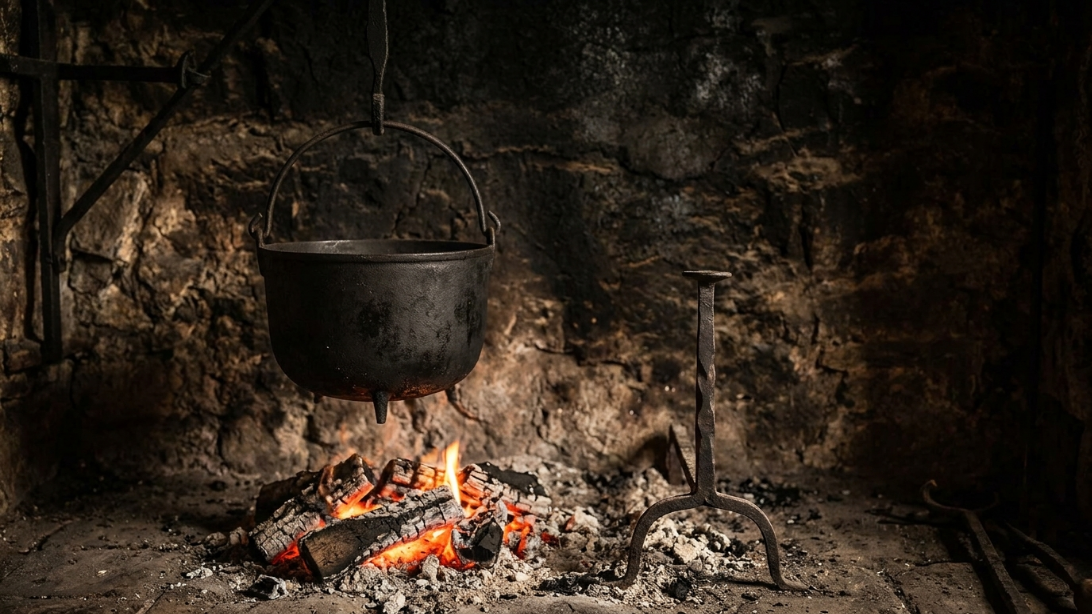
Large cooking pots formed the heart of many traditional kitchens.
Families prepared soups, grains, vegetables, legumes, and meat together inside a single vessel suspended above the fire.
One-pot cooking conserved fuel, simplified preparation, and ensured every family member received a balanced meal.
Many traditional stews enjoyed around the world today evolved directly from these ancient cooking practices.
🏕️ Portable Kitchens for Traveling Communities
Nomadic societies developed lightweight cooking equipment designed for constant movement.
Foldable supports held cooking pots.
Leather containers carried water.
Compact stone grinders processed grain.
Portable clay vessels transported spices and dried food.
These practical innovations allowed entire communities to prepare meals wherever they settled.
Mobility shaped kitchen design in ways very different from permanent settlements.
🪵 Smokehouses Before Modern Preservation
Dedicated smokehouses became essential food preservation structures.
Rather than cooking food quickly, smokehouses exposed meat, fish, and cheese to cool smoke for extended periods.
This slow process protected food while developing complex flavors.
Different woods produced distinctive aromas.
Entire communities often shared smokehouses during harvest seasons when large quantities of food required preservation.
Many artisan smoked foods today continue following these historic techniques.
🌍 Ancient Fuel Sources Beyond Firewood
Although wood remained the most common fuel, ancient civilizations used many alternatives.
Dried animal dung fueled fires in treeless regions.
Charcoal produced higher temperatures.
Agricultural waste burned efficiently after harvest.
Peat supplied fuel in northern climates.
Communities carefully adapted cooking methods according to locally available energy resources.
This flexibility allowed civilizations to thrive in diverse environments.
🍞 Communal Bread Baking Traditions
Bread production often became a community activity.
Families prepared dough individually but baked it together inside large shared ovens.
This practice reduced fuel consumption while strengthening neighborhood relationships.
Waiting for bread to bake created opportunities for conversation, trade, and social interaction.
Communal baking remained common across Europe, North Africa, and parts of Asia for centuries.
🏺 Ancient Kitchen Organization
Historical kitchens followed practical layouts designed for efficiency.
Grain storage remained dry.
Water stayed easily accessible.
Cooking fires occupied central positions.
Utensils hung from walls.
Clay jars organized oils, herbs, and preserved foods.
Despite lacking modern cabinets, ancient kitchens demonstrated impressive organization based upon daily cooking routines.
🌱 Sustainable Practices Hidden in Ancient Kitchens
Many forgotten cooking methods naturally minimized waste.
Broken pottery became drainage material.
Ash fertilized gardens.
Animal bones produced broth.
Vegetable scraps fed livestock.
Reusable cookware lasted generations.
Seasonal ingredients reduced unnecessary storage.
Modern sustainability movements increasingly recognize the wisdom preserved within these traditional kitchen systems.
📚 Preserving Ancient Culinary Knowledge
Historians, archaeologists, and culinary researchers continue documenting obsolete cooking methods before they disappear completely.
Excavations reveal ancient hearths.
Museums preserve traditional utensils.
Experimental archaeology recreates forgotten recipes.
Professional chefs revive historical techniques.
These efforts ensure future generations can continue learning from the remarkable innovations of early civilizations.
✨ Conclusion: Ancient Kitchens Still Inspire Modern Cooking
The story of forgotten kitchen technologies proves that extraordinary cooking has never depended solely on advanced equipment. Ancient societies mastered heat control, food preservation, storage, baking, and sustainable resource management using little more than natural materials and accumulated experience.
Although electric appliances have transformed modern kitchens, many traditional methods continue influencing artisan bread making, wood-fired cooking, slow roasting, smoking, fermentation, and sustainable food preparation. Professional chefs increasingly appreciate these forgotten techniques because they produce exceptional flavors while honoring centuries of culinary craftsmanship.
Exploring obsolete cooking tools and methods reminds us that innovation often begins with simplicity. The ingenuity of ancient cooks continues inspiring modern kitchens, demonstrating that some of history’s greatest culinary achievements were created with nothing more than fire, clay, stone, wood, and human creativity. 🌍🍳🏺