Anúncios
Introduction: The Hidden Meaning Behind Ancient Ceremonial Foods
Food has always been more than a basic human necessity. Across thousands of years of history, ancient civilizations transformed ordinary ingredients into sacred offerings, symbolic meals, and ceremonial feasts that reflected their deepest beliefs. Every culture developed unique traditions in which food represented life, prosperity, spirituality, gratitude, and the connection between humans and the divine.
Although many remarkable civilizations have disappeared, their ceremonial dishes continue to fascinate archaeologists, historians, chefs, and travelers around the world. From the sacred cacao of the Maya to the ritual bread of Ancient Egypt, these lost culinary traditions reveal extraordinary stories about religion, agriculture, politics, and everyday life.
Exploring the ceremonial dishes of lost cultures allows us to understand not only what ancient people ate but also why these foods carried such profound symbolic meaning. Today, archaeological discoveries continue to uncover forgotten recipes, ceremonial vessels, and ancient cooking techniques that inspire modern cuisine and preserve humanity’s shared cultural heritage.
Why Ceremonial Dishes Were Essential in Ancient Societies
Ancient civilizations viewed ceremonial meals as powerful expressions of identity, faith, and community. Unlike everyday food, ceremonial dishes were carefully prepared for important religious festivals, royal celebrations, harvest ceremonies, weddings, funerals, military victories, and seasonal events.
Each ingredient carried symbolic importance. Grain represented prosperity and survival. Honey symbolized purity and divine blessing. Wine reflected celebration and transformation. Salt stood for loyalty and preservation, while roasted meats often honored gods, ancestors, or rulers.
These sacred meals united entire communities, reinforced social bonds, and strengthened political alliances. They reminded people of their shared history while expressing gratitude for successful harvests, favorable weather, and protection from supernatural forces.
The Sacred Chocolate of the Ancient Maya
Among the world’s most fascinating ceremonial dishes were those prepared by the Maya civilization. Cacao was not considered an ordinary beverage. Instead, it was a sacred drink reserved for royalty, priests, warriors, and important religious ceremonies.
Unlike modern chocolate, ceremonial cacao was mixed with chili peppers, vanilla, flowers, maize, and aromatic herbs. The resulting beverage possessed a rich, bitter flavor that symbolized strength, fertility, wisdom, and divine communication.
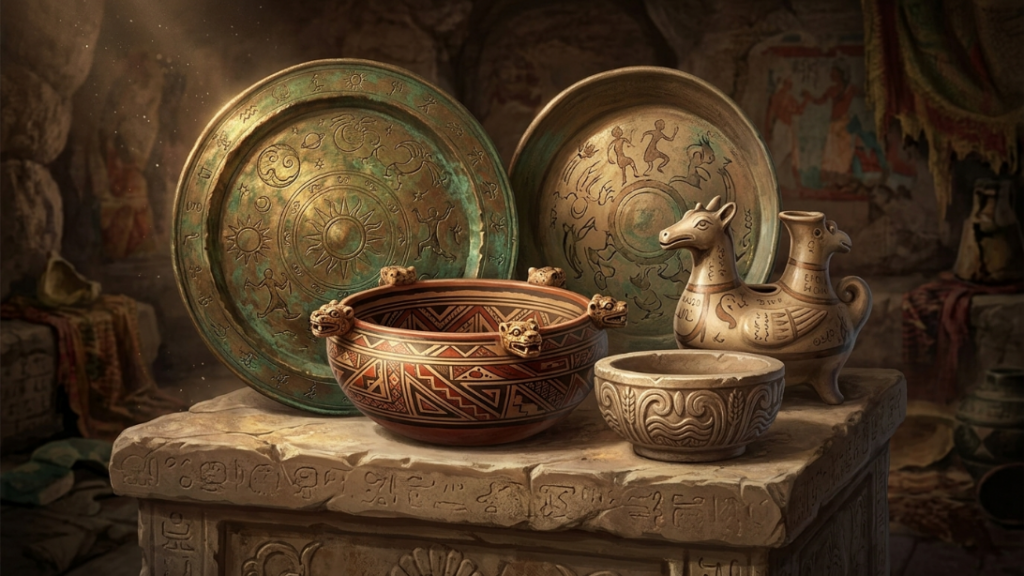
Archaeologists have discovered beautifully decorated ceramic vessels containing traces of ancient cacao, confirming its importance within Maya society. Written inscriptions also reveal that chocolate accompanied weddings, political negotiations, religious sacrifices, and coronation ceremonies.
Today, chocolate remains one of humanity’s favorite foods, yet few people realize its origins lie within one of history’s most sacred ceremonial traditions.
Ancient Egypt and the Food of Eternity
The people of Ancient Egypt believed that death marked the beginning of another journey rather than the end of life. Because of this belief, ceremonial food played an essential role in funerals, temple rituals, and royal celebrations.
Bread, beer, onions, dates, figs, roasted duck, fish, honey, and fresh vegetables were frequently presented as offerings to the gods and placed inside tombs to nourish the deceased during the afterlife.
Wall paintings found inside pyramids and tombs illustrate elaborate banquets featuring musicians, dancers, servants, and carefully arranged ceremonial dishes. These scenes reflected abundance, prosperity, and eternal happiness.
Many preserved loaves of bread discovered by archaeologists demonstrate the extraordinary baking skills developed by Egyptian bakers more than four thousand years ago.
The Inca Empire’s Sacred Agricultural Feasts
High in the Andes Mountains, the Inca Empire developed one of the world’s most impressive agricultural civilizations. Their ceremonial dishes celebrated the close relationship between people, nature, and the sun god Inti.
Corn, potatoes, quinoa, beans, squash, roasted llama, and guinea pig formed the foundation of many sacred feasts. One of the most important ceremonial beverages was chicha, a fermented corn drink consumed during festivals, political gatherings, and religious celebrations.
Large public feasts reinforced social unity while expressing gratitude for successful harvests and fertile land. Food was viewed as a sacred gift from nature, requiring respect, balance, and careful stewardship.
Many traditional Andean recipes still preserve ingredients first cultivated by the Inca thousands of years ago.
Religious Banquets in Ancient Mesopotamia
Mesopotamia, often called the cradle of civilization, possessed highly organized ceremonial food traditions that influenced many neighboring cultures.
Ancient clay tablets preserve some of humanity’s earliest written recipes. These documents describe elaborate meals featuring lamb, barley, onions, garlic, herbs, dairy products, and beer.
Temple priests carefully supervised ritual offerings presented to powerful deities. These ceremonies reinforced the belief that maintaining harmony between humanity and the gods ensured peace, prosperity, and agricultural abundance.
Royal banquets also demonstrated political authority. Kings displayed wealth and generosity by serving impressive feasts attended by nobles, military leaders, foreign ambassadors, and religious officials.
The Ceremonial Cuisine of the Minoan Civilization
Long before Classical Greece flourished, the Minoan civilization on the island of Crete developed sophisticated ceremonial dining traditions connected to religion and seasonal festivals.
Excavations at Knossos reveal beautiful pottery, ceremonial drinking cups, storage vessels, and communal dining areas used during religious celebrations.
Olive oil, seafood, figs, grapes, honey, barley, herbs, and wine likely formed the basis of ritual meals celebrating fertility, nature, and agricultural prosperity.
Colorful frescoes depicting dancing, processions, and communal gatherings suggest that ceremonial food formed only one part of larger religious festivals involving music, athletic competitions, and artistic performances.
Celtic Feasting Traditions Across Ancient Europe
For the Celtic peoples, ceremonial feasts symbolized courage, generosity, hospitality, and community strength.
Seasonal festivals including Samhain, Beltane, Lughnasadh, and Imbolc featured roasted meats, fresh bread, dairy products, berries, apples, nuts, and mead.
These celebrations honored changing seasons, successful harvests, and ancestral spirits. Community leaders demonstrated their status by hosting generous feasts open to families, warriors, and travelers.
The sharing of food reinforced trust between neighboring tribes while preserving cultural traditions passed down through generations.
Indigenous Ceremonial Foods of North America
Before European contact, Indigenous cultures throughout North America developed rich ceremonial food traditions reflecting deep respect for nature.
Corn, beans, squash, wild rice, salmon, venison, berries, medicinal herbs, and maple syrup frequently appeared during harvest festivals, seasonal ceremonies, and spiritual gatherings.
Rather than emphasizing luxury, Indigenous ceremonial meals celebrated sustainability, gratitude, and the balance between humans and the natural environment.
Many of these ancient food traditions continue today through Indigenous communities dedicated to preserving their cultural heritage.
Symbolic Ingredients Used in Ancient Ritual Foods
One fascinating aspect of ceremonial dishes is that every ingredient carried symbolic meaning beyond nutrition.
- Grain represented life, survival, and prosperity.
- Honey symbolized purity, healing, and divine blessing.
- Wine reflected celebration, transformation, and spiritual communion.
- Salt represented loyalty, protection, and preservation.
- Fish symbolized abundance and fertility.
- Eggs represented rebirth and new beginnings.
- Fire symbolized purification and divine presence.
These symbolic meanings often transcended geographic boundaries, appearing in multiple civilizations separated by thousands of miles and hundreds of years.
Archaeology Is Reconstructing Forgotten Recipes
Modern archaeology has revolutionized our understanding of ancient ceremonial cuisine.
Researchers now analyze microscopic plant remains, pottery residues, preserved seeds, pollen, animal bones, cooking tools, and ancient ovens to reconstruct meals that disappeared thousands of years ago.
Advanced scientific methods including isotope analysis, DNA sequencing, residue chemistry, and 3D imaging allow experts to identify forgotten ingredients with remarkable accuracy.
Every archaeological discovery contributes another piece to humanity’s culinary history, revealing how ancient civilizations prepared, served, and celebrated ceremonial food.
How Lost Cultures Continue to Influence Modern Cuisine
Although many ancient civilizations vanished, their ceremonial food traditions never disappeared completely.
Modern religious celebrations still include sacred bread, ceremonial wine, harvest feasts, traditional desserts, and symbolic family meals inspired by ancient customs.
Many ingredients once cultivated by lost civilizations—including quinoa, cacao, amaranth, chia, millet, olives, figs, and ancient grains—have experienced remarkable global popularity due to their nutritional value and historical significance.
Contemporary chefs increasingly study archaeological evidence to recreate historical recipes, offering diners unique experiences inspired by ancient culinary traditions.
Preserving Culinary Heritage for Future Generations
Museums, universities, historians, Indigenous communities, and culinary researchers work together to preserve endangered food traditions before they disappear forever.
Experimental archaeology allows researchers to recreate ancient cooking methods using traditional clay ovens, stone grinding tools, wood-fired hearths, and historically accurate ingredients.
These reconstructions provide valuable insight into the daily lives, religious beliefs, and agricultural innovations of civilizations that shaped human history.
Preserving ceremonial dishes is not simply about protecting recipes—it is about safeguarding cultural identity, historical knowledge, and humanity’s collective memory.
Sustainable Lessons from Ancient Food Traditions
Many lost cultures practiced sustainable agriculture long before environmental conservation became a global concern.
Terraced farming, crop rotation, natural irrigation, seed preservation, companion planting, and biodiversity management allowed ancient societies to thrive for centuries.
Modern scientists increasingly study these agricultural techniques as potential solutions for climate change, soil degradation, and food security.
Ancient ceremonial ingredients often came from highly resilient crops adapted to local ecosystems, demonstrating remarkable environmental wisdom.
Why Ceremonial Dishes of Lost Cultures Still Matter Today
The ceremonial dishes of lost cultures remind us that food has always been one of humanity’s most powerful forms of communication.
Every sacred meal expressed gratitude, celebrated life, honored ancestors, strengthened communities, and connected ordinary people with something greater than themselves.
Although temples have crumbled, empires have fallen, and languages have disappeared, these remarkable culinary traditions continue inspiring historians, archaeologists, chefs, and curious travelers across the world.
Studying ancient ceremonial cuisine allows us to appreciate not only extraordinary recipes but also the creativity, resilience, spirituality, and cultural richness of civilizations that helped shape modern society.
As new archaeological discoveries continue to emerge, the story of ceremonial dishes grows even more fascinating. Every recovered vessel, preserved seed, ancient kitchen, and forgotten recipe deepens our understanding of humanity’s shared past.
Ultimately, the ceremonial dishes of lost cultures serve as enduring reminders that food is far more than nourishment. It is history, identity, tradition, belief, and celebration woven together across generations. By preserving and exploring these extraordinary culinary legacies, we honor the countless civilizations whose wisdom continues to enrich our world today.